Efficient storage is the backbone of modern logistics. In Indonesia, the warehouse and logistics industry has seen rapid growth, driven by eCommerce, manufacturing, and distribution expansion. To handle increasing inventory volumes and maintain smooth operations, businesses rely heavily on warehouse racking systems. These systems optimize storage, enhance safety, and streamline workflow. Choosing the right type of racking system is crucial for operational efficiency, cost savings, and worker safety.
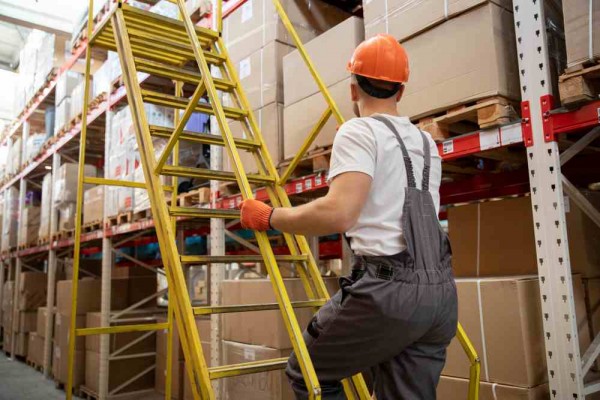
This article explores the most used types of warehouse racking systems in Indonesia, their benefits, and applications.
1. Selective Pallet Racking
Selective pallet racking is the most widely used system in Indonesian warehouses. It is ideal for businesses that handle a variety of products, each stored on pallets.
Key Features:
- Provides direct access to every pallet, reducing retrieval time.
- Simple structure with adjustable beam levels.
- Suitable for warehouses with medium to high SKU diversity.
Benefits:
- Maximizes warehouse space while keeping inventory accessible.
- Easy to install and maintain.
- Compatible with forklifts for efficient loading and unloading.
Applications: This system is common in retail warehouses, distribution centers, and manufacturing facilities where frequent picking occurs.
2. Drive-In and Drive-Through Racking
Drive-in and drive-through racking systems are popular in warehouses with high-density storage needs. These systems are ideal when storage space is limited, and similar products are stored in bulk.
Key Features:
- Forklifts can enter the racking lanes to place and retrieve pallets.
- Drive-through allows access from both ends, while drive-in has a single entry.
- Supports the Last-In-First-Out (LIFO) system for drive-in racks.
Benefits:
- Maximizes storage density, utilizing vertical and horizontal space efficiently.
- Reduces the need for multiple aisles, freeing up more floor space.
Applications: Frequently used in cold storage facilities, bulk product storage, and industrial warehouses.
3. Push Back Racking System
Push back racking is another high-density system that uses inclined rails to store pallets. When a new pallet is loaded, it pushes the previous pallets back along the rails.
Key Features:
- Supports Last-In-First-Out (LIFO) inventory flow.
- Can store multiple pallets per bay without increasing aisle space.
- Compact design improves storage density.
Benefits:
- Faster loading and retrieval compared to drive-in systems.
- Reduces travel time for forklifts.
- Ideal for warehouses with medium turnover inventory.
Applications: Food and beverage distribution, wholesale warehouses, and manufacturing facilities with bulk goods.
4. Pallet Flow Racking System
Pallet flow racking uses gravity rollers to move pallets from the loading end to the picking end. It allows for a First-In-First-Out (FIFO) system, which is crucial for perishable goods.
Key Features:
- High-density storage with FIFO inventory rotation.
- Gravity-fed system reduces manual handling.
- Each lane has rollers to move pallets smoothly.
Benefits:
- Reduces risk of product spoilage due to FIFO management.
- Minimizes forklift movements, improving operational efficiency.
- Saves time on inventory management.
Applications: Cold storage, pharmaceutical storage, and food and beverage warehouses.
5. Cantilever Racking System
Cantilever racks are designed to store long, bulky items such as pipes, lumber, and steel rods. Unlike traditional pallet racks, cantilever racks have open fronts and arms to hold items.
Key Features:
- Adjustable arms to accommodate different lengths.
- Open structure allows easy access to goods.
- Can be single-sided or double-sided depending on aisle space.
Benefits:
- Simplifies storage of irregularly shaped or oversized items.
- Reduces handling time for long products.
- Maximizes use of vertical space for heavy or long goods.
Applications: Timber yards, steel suppliers, and construction material warehouses.
Conclusion
Warehouse racking systems are a critical component of logistics and storage operations in Indonesia. The most used systems—selective pallet, drive-in/drive-through, push back, pallet flow, and cantilever racking—each provide unique benefits based on storage needs, inventory types, and operational goals. Businesses that choose the right racking system enhance warehouse efficiency, safety, and cost-effectiveness.
Investing in high-quality racking systems ensures long-term durability, operational efficiency, and optimised storage capacity, helping Indonesian warehouses stay competitive in a fast-paced market.
FAQs
1. What is the most common racking system in Indonesia?
Selective pallet racking is the most commonly used due to its accessibility and flexibility for various products.
2. Which racking system is best for high-density storage?
Drive-in and drive-through racking systems are ideal for maximizing storage space while storing bulk products.
3. How does a pallet flow racking system work?
It uses gravity rollers to move pallets from the loading end to the picking end, supporting a FIFO inventory system.
4. Are cantilever racks suitable for heavy goods?
Yes, cantilever racks are designed to handle long, heavy, and irregularly shaped items efficiently.
5. Can warehouses combine different racking systems?
Absolutely. Many warehouses use a mix of selective, push back, and cantilever racks to optimize space and meet diverse storage needs.